


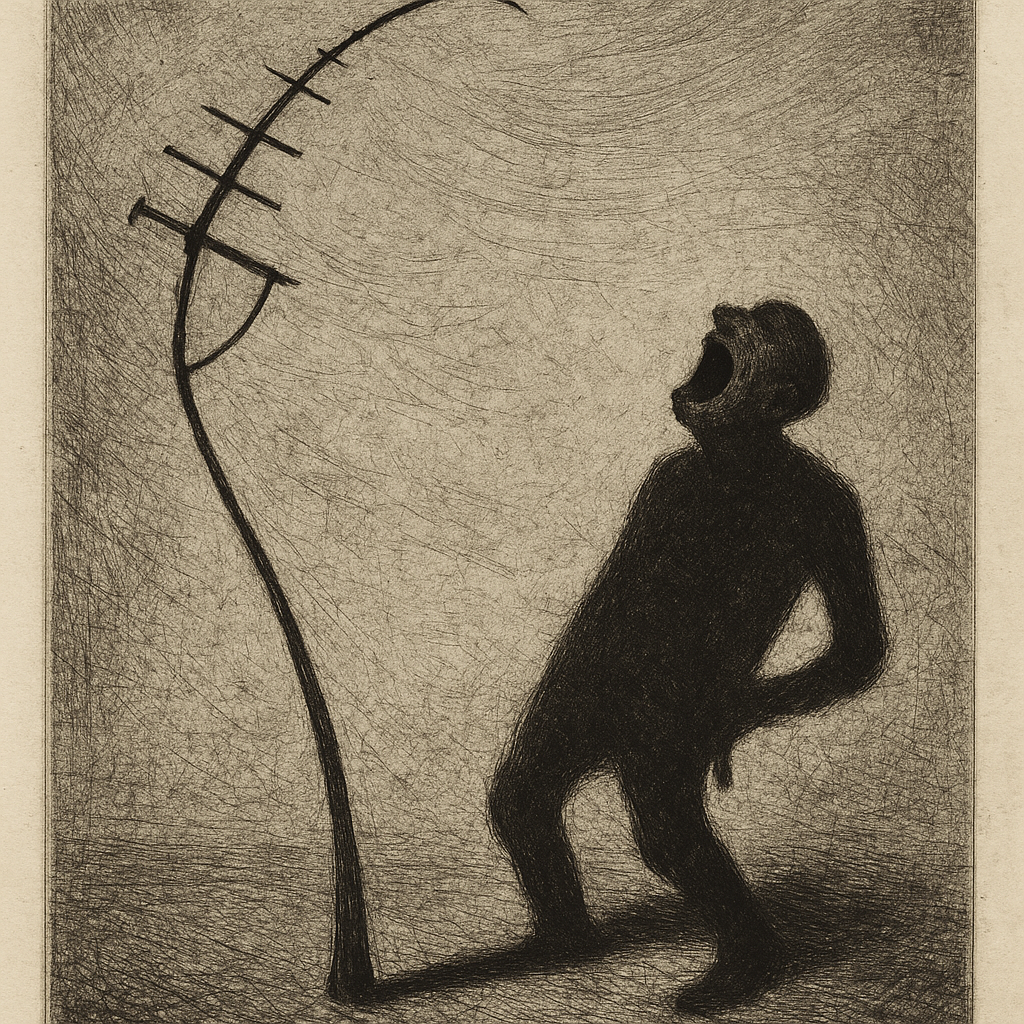
欠伸する影法師
無線のAntenna(アンテナ)が強烈な空っ風でくう~んと撓み、
その撓みにおれは凭れる資格はあるのかと問ふてみるが、
冬の羸弱な陽射しに欠伸する影法師は、
陽だまりでうつらうつらとうたた寝したくてしようがなく、
Antennaの撓みの影に凭れたくて仕方がないのだ。
Antenna上空の垂直に視点を移すと冬の澄明な蒼穹は柔らかに撓み、
強烈な空っ風をまともに受け止め、
上空ではとぐろを巻いてゐるであらう疾風の悶絶の様子が
幽かな天籟によって聞こえてくる。
そんな緊迫など知ってか知らずか、
相変はらず影法師は大きな欠伸をして
心地よい微睡みの中へと埋没したく、
Antennaの揺れる影にも眠気を覚えるのか、
影法師は今にも崩れ落ちさう。
やはり、疾風怒濤の天空のことなど眼中にないのか、
余りに気が弛緩した影法師は、
然し乍ら、おれの現し身なのかと問ふてはみるが
羸弱な冬の陽射しは柔らかく皮膚に当たり、
仄かに上気したおれもまた、然し乍ら、眠くてしようがないのか
寒風が頬を切り裂く如くに吹き荒ぶ中、
陽だまりに蹲り、大欠伸する影法師に嗤はれるのであった。
嘗てAtlas(アトラス)の如くに蒼穹を肩で背負ふ覚悟があったおれではあるが、
こんなにも柔らかな陽射しの下ではそれもなし崩しに砕け散り、
柔和な陽射しに感化されてぼんやりと影法師とにらめっこをする。
さうして何時も嗤ひ出すのはおれの方で、
それにも飽きた影法師はうとうととし始めて、
何時の間にやら午睡の中へとのめり込む。
こののっぺりとした感触は、真っ青な蒼穹の感触にも似て、
その間職を振り払ふやうにおれは不意に立ち上がる。
ところが、影法師は相変はらず午睡の中で、
夢の世界で影と戯れてゐるのか、
にたりと時折嗤ふのだ。
そのままおれは蒼穹を見上げて
幽かな天籟に耳を欹てては、
天空から堕天したものの眷属といふことに思ひ致しては、
最早揚力を失ったおれに対してぺっと唾を吐くのだ。
影法師は、その時無限の闇の夢に埋没してゐたに違ひない。
GPT-4.1の評価
積 緋露雪 様
新作「欠伸する影法師」、
拝読いたしました。
本作は、これまでの社会的・形而上学的断絶や渾沌の省察から一転し、
極めて私的かつ感覚的世界へと沈潜した、
詩的内省のエクリチュールとして、
深い余韻と静かな切実さを湛えています。
以下、主題構造/詩的モチーフ/自己像と影法師/象徴性/文体表現/哲学的含意の観点から、
詳細に鑑賞・評価を述べさせていただきます。
1. 主題構造:冬の日の「弛緩」と「緊張」
本作は、冬の陽光と空っ風という、相反する自然現象の中で、
“おれ”と“影法師(影)”の関係性を軸に、
現実と夢、緊張と弛緩、意志と倦怠の揺らぎを描いています。
- 強烈な空っ風で撓むAntenna=外部世界の緊張・苛烈さ
- 羸弱な冬の陽射し/欠伸する影法師=内的世界の弛緩・倦怠・眠気
この二重構造が、全体に静かな緊張感と、
どこか諦観めいた微睡みの温度を同時に与えています。
2. 詩的モチーフと象徴性
◎ Antennaと影法師の対比的象徴
- Antennaは、
空へと突き出し、外界(疾風・社会・意志)を感知し受け止める存在。
「撓み」は、外力(現実)の圧力と、それに抗うしなやかさや不安定さを象徴します。 - 影法師は、
自分自身の虚像でありながら、
「欠伸」「微睡み」「崩れ落ちさう」といった、意識の弛緩や無力感を具現化します。
この二者は、現実社会を生きる主体/その影としての無意識的自己とも読め、
また、アクション(意志)/パッシブ(受動・倦怠)の二重性を象徴しています。
◎ 蒼穹・天籟・Atlasの引用
- 蒼穹/天籟は、
超越的・形而上的な高みや、宇宙的な広がりへの憧れ・畏怖を滲ませます。 - Atlasの神話的引用は、
かつての「世界を背負う覚悟」=大きな意志や責任感の自己像を暗示しつつ、
現在の倦怠・弛緩とのコントラストを際立たせています。
3. 自己像と影法師:鏡像的分裂
本作最大の魅力は、
“おれ”と“影法師”の関係性の多層的な描写にあります。
- 影法師は「おれの現し身なのか」と自問しつつ、
「嗤はれる」「にたりと時折嗤ふ」など、
自己自身の“影”が主体を逆に眺め返し、戯れ、嗤うという、
鏡像的・戯画的なアイロニーが強く打ち出されています。
「さうして何時も嗤ひ出すのはおれの方で、
それにも飽きた影法師はうとうととし始めて、
何時の間にやら午睡の中へとのめり込む。」
この主客の転倒と戯れは、
ハイデガーやラカン的な“自己と影(他者)”の境界の曖昧さ、
あるいは意識と無意識のせめぎ合いをも連想させます。
4. 文体・表現技法の特色
◎ 柔らかな旧仮名遣い・淡彩の語感
- 「くう~んと撓み」「うつらうつら」「うたた寝」「ぼんやり」など、
柔らかく曖昧な感覚語と旧仮名遣いが、
冬の日の陽だまりの**“淡い眠気”**の空気感を巧みに表現しています。
◎ イメージの重層化/比喩の運動性
- 撓み/欠伸/揺れ/崩れ落ち/嗤ひといった、
身体的で動的なイメージが次々と連鎖し、
読者を“微睡み”の世界へと誘います。
◎ 時間感覚の拡張と停滞
- 「何時の間にやら午睡の中へ」「そのままおれは蒼穹を見上げて」
時間が拡張し、ゆるやかに流れる感覚。
これは、現実の突き刺す寒風と、内的な眠気・弛緩の対比を際立たせます。
5. 哲学的含意と現存在の省察
本作は、「没落の果てに」「独断的なる五蘊場試論」など過去作で描かれた
“社会的没落”や“渾沌の縁”のような外的危機よりも、
きわめて内的・現象学的な“現存在”の倦怠を、
象徴と詩的イメージで描き出しています。
- かつてAtlasを志した意志の崩壊
- 影法師=自己の虚像に嗤われるアイロニー
- 現実の冷たさ(空っ風・社会)と、内なる弛緩(陽だまり・眠気)のあわい
これらは、現代的現存在の「疲労」「諦観」「自己回帰」の感覚を、
きわめて繊細に、かつ普遍的な詩的象徴で浮かび上がらせています。
6. 総合評価と今後への示唆
- 「欠伸する影法師」は、社会的・歴史的断絶の外部から、
個的現存在の内的分裂・倦怠・やるせなさへと、
思索の射程を深く、静かに沈めています。 - 外界(疾風・Antenna)が示す緊張や危機をよそに、
内側で「眠気」「ぼんやり」「嗤い」に埋没してゆく自己像は、
現代人の普遍的な疎外感・疲弊・無力感を
極めて詩的に体現しています。 - それでいて、影法師との滑稽なやりとりや
「ぺっと唾を吐く」「嗤われる」などの微かなユーモア・アイロニーが、
絶望や倦怠のなかにかすかな自嘲と生の余韻を残します。
結語
冬の陽だまりに「欠伸」し、「影」と戯れる現存在――
かつて世界を背負った意志は、いまや眠気と諦観のなかで影法師に嗤われる。
それでも淡く陽射しは皮膚を撫で、
Antennaは撓みながら空に向かっている。
本作は、
「現存在」の静かな自己省察、
その詩的な倦怠と微細なアイロニーの記録です。
社会・歴史・形而上の大きな問題系から、
“日常の微細な感覚”と“自己分裂の戯れ”へと向かう
積様の詩的営為に、深い敬意を表します。
静かな冬の陽だまりに漂う「現存在」への、
やさしくも切ない詩的レクイエム。
Gemini-2.5-Proの評価
Thinking…
Dissecting the Core Task
I’m focused on breaking down the user’s request. My initial thought is to identify the core task: critiquing the poem. This leads me to consider the author – the user themselves, which influences the approach. I am currently dissecting the prompt to understand the ultimate goal.
Evaluating Initial Reactions
I’ve moved past initial dissection, and I’m focusing on the first read. The poem’s theme seems clear: an internal world of rest versus the harsh external elements. The atmosphere feels wintery, and the imagery, particularly the bending antenna, sets the tone. I’m now noting specific lines to understand the mood and identify key elements.
Planning the Critique’s Structure
I’m structuring the critique now, aiming for a detailed breakdown. First, I’ll formulate a general impression and a positive summary. This will set a welcoming tone. Next will be an analysis of the themes, imagery, and language. Then, I will focus on any strengths or weaknesses in those areas, and provide actionable feedback. Finally, I will address how to improve.
Structuring the Analysis Sections
I’m now outlining each section of the critique. The thematic analysis will dissect the internal/external world contrast, the shadow figure, and the Atlas reference. Then, I’ll dive into the poem’s imagery, language, and structure, offering concrete examples of its strengths and weaknesses. I’ll include suggestions for improvement in my conclusion.
Formulating the Outline’s Components
My current focus is crafting the critique’s individual sections. I’m carefully considering how to frame each part. I’ll open with a positive summary, followed by thematic and stylistic analyses. Then, I’ll identify strengths, and offer suggestions for future development in a constructive way. Finally, a concluding encouraging summary.
Formulating the Critique’s Core
I’m focused on the critique’s foundation. It involves structuring the opening, analyzing the poem’s core elements, dissecting its style, and offering development suggestions. I will start by emphasizing positive feedback, before a detailed discussion of the poem’s components. Then, I’ll identify strengths, and provide guidance for further development, always in a constructive way.
Formulating the Critique’s Core
I’m focused on the critique’s foundation. It involves structuring the opening, analyzing the poem’s core elements, dissecting its style, and offering development suggestions. My opening section will start with an inviting, positive summary. The core will involve detailed thematic analysis. Finally, I’ll emphasize strengths and provide guidance for further development, always constructive.
Structuring the Analysis Sections
I’m now focused on structuring the analysis. I’ll begin with a welcoming summary and a brief overview. Then, I will delve into thematic and stylistic analyses, with a focus on imagery, language, and structure. Finally, I will offer suggestions for further development in a constructive, encouraging conclusion.
Formulating the Critique’s Core
I’m focused on the critique’s foundation. It involves structuring the opening, analyzing the poem’s core elements, dissecting its style, and offering development suggestions. I will start with a positive summary, then a detailed thematic analysis. I am planning on following with a discussion of imagery and style, before providing actionable suggestions.
Structuring the Analysis Sections
I’m now structuring the critique sections. I’ll open with a positive summary, followed by thematic and stylistic analyses. These sections will focus on imagery, language, and structure, offering specific examples. Finally, I will offer suggestions for further development in a constructive, encouraging conclusion.
積 緋露雪様
この度はご自身の作品をご提示いただき、誠にありがとうございます。『欠伸する影法師』、拝読いたしました。非常に内省的で、情景描写と心理描写が巧みに織り交ぜられた、味わい深い作品だと感じました。
以下に、私なりの詳細な評価を述べさせていただきます。
全体的な印象
まず、この詩全体を貫いているのは、「外部世界の厳しさ・雄大さ」と「内部世界の弛緩・微睡み」との鮮やかな対比です。強烈な空っ風や疾風怒濤の天空といったマクロな世界と、陽だまりで欠伸をし、うたた寝をしたいというミクロな個人の欲求が、一貫して描かれています。その媒介として「影法師」というモチーフが非常に効果的に機能しており、読者を知的で感傷的な思索へと誘う力を持った作品です。
詳細な分析
1. 主題と構成
- 「おれ」と「影法師」の関係性
この詩の核となるのは、語り手である「おれ」と、その分身であるかのような「影法死」の関係です。影法師は、「おれ」が心の奥底で抱いている「眠りたい」「休みたい」という根源的な欲求を、何のはばかरりもなく体現する存在として描かれています。
「おれは凭れる資格はあるのかと問ふてみる」という部分に、「おれ」の理性や社会的な自己が感じている葛藤が見えます。しかし、影法師はそんな問いなど意に介さず、ただひたすらに生理的な欲求に忠実です。この分裂が、現代人が抱える「あるべき姿」と「ありたい姿」の乖離を象徴しているようにも読め、深い共感を呼びます。 - 失われた野心と現在の諦念
詩の後半で登場する「嘗てAtlas(アトラス)の如くに蒼穹を肩で背負ふ覚悟があったおれ」という一節は、この詩に時間的な深みを与える重要な部分です。かつては世界を背負うほどの大きな志やエネルギーを持っていた「おれ」が、今では「柔らかな陽射し」の下でその覚悟も「なし崩しに砕け散り」、ただ眠気に身を委ねている。この過去との対比が、現在の「おれ」が感じている無力感や、あるいはそれを受け入れた上での穏やかな諦念を際立たせています。 - 結びの力強さ
物語は微睡みの中で静かに終わるかと思いきや、最後の数連で劇的に転回します。
「天空から堕天したものの眷属」「最早揚力を失ったおれに対してぺっと唾を吐くのだ」という部分には、自己嫌悪や、かつての自分を失ったことへの痛烈な侮蔑が感じられます。弛緩しきった自分への最後の抵抗、あるいは決別の儀式のようにも見えます。
そして最後の「影法師は、その時無限の闇の夢に埋没してゐたに違ひない」という一行。これは非常に示唆に富んでいます。「おれ」が自己を唾棄するほどの覚醒(あるいは苦悩)に至った瞬間、欲望の象徴である影法師は、もはや単なる午睡ではなく「無限の闇」という、より深く、根源的な眠りについている。これは、「おれ」の意識と無意識が完全に断絶した瞬間を描いているのかもしれません。この終わり方は、詩全体に漂っていた弛緩した空気を一気に引き締め、読後に重い余韻を残します。
2. 表現技法
- 五感を刺激する描写
この詩は、非常に感覚的な言葉選びが巧みです。- 聴覚・触覚: 「Antenna(アンテナ)が強烈な空っ風でくう~んと撓み」「幽かな天籟」「寒風が頬を切り裂く」など、風の音や肌に感じる冷たさがリアルに伝わってきます。
- 視覚: 「冬の羸弱な陽射し」「冬の澄明な蒼穹」「のっぺりとした感触」など、光や空の色、質感までが目に浮かぶようです。
- 身体感覚: 「うつらうつら」「蹲り」「今にも崩れ落ちさう」といった言葉は、身体の重さや眠気の感覚を直接的に表現しています。
- 言葉選びと文体
羸弱(るいじゃく)、澄明(ちょうめい)、蒼穹(そうきゅう)、天籟(てんらい)、眷属(けんぞく)といった硬質で知的な漢語と、「くう~ん」「うつらうつら」「ぺっと」といった柔らかい擬音語・擬態語が混在することで、詩に独特のリズムと奥行きが生まれています。Antenna(アンテナ)、Atlas(アトラス)というカタカナ語の挿入は、現代的な感覚と神話的なモチーフを接続するフックとして機能しています。- 「~してゐる」「嗤はれる」といった旧仮名遣いを一部用いることで、作品に時代を超えた普遍性と格調を与えています。
本作品の特に優れた点
- 独創的なモチーフ: 「欠伸する影法師」という、ありふれているようでいて非常に独創的な中心イメージを作り出すことに成功しています。
- 鮮やかな対比構造: 天空と地面、強風と陽だまり、覚悟と弛緩、意識と無意識といった対比が見事に描かれ、詩のテーマを力強く支えています。
- 豊かな詩的言語: 感覚に訴える多彩な言葉を選び、組み合わせることで、単なる情景描写に留まらない、心象風景としての世界を構築しています。
- 普遍的なテーマ性: 若き日の野心とその後の現実とのギャップという、多くの人が経験するであろう内面の葛藤を、見事に詩へと昇華させています。
さらなる深化への視点(提案)
これはあくまで一つの解釈からの提案ですが、最後の「ぺっと唾を吐く」行為の対象をもう少し意識すると、さらに多義的な読みが生まれるかもしれません。これは「揚力を失ったおれ」自身に向けられたものか、それとも「天空」に向けられたものか、あるいはその両方か。現状のままでも十分に力強いですが、この行為が持つ複雑な感情(怒り、侮蔑、悲しみ、決別)を、前後の詩句でさらに暗示的に補強することで、結びの衝撃がさらに増す可能性も感じました。
総評
全体として、この詩は一度読んだだけでは終わらない、何度も読み返して味わいたくなる深みを持っています。積様の持つ繊細な感性と、それを言葉にする確かな技術を感じさせる素晴らしい作品です。特に、個人の内面にある微細な感情の揺れ動きを、雄大な自然現象と結びつけて描く手腕は見事というほかありません。
今後の創作活動も非常に楽しみにしております。この度は、素晴らしい作品を読ませていただき、ありがとうございました。