


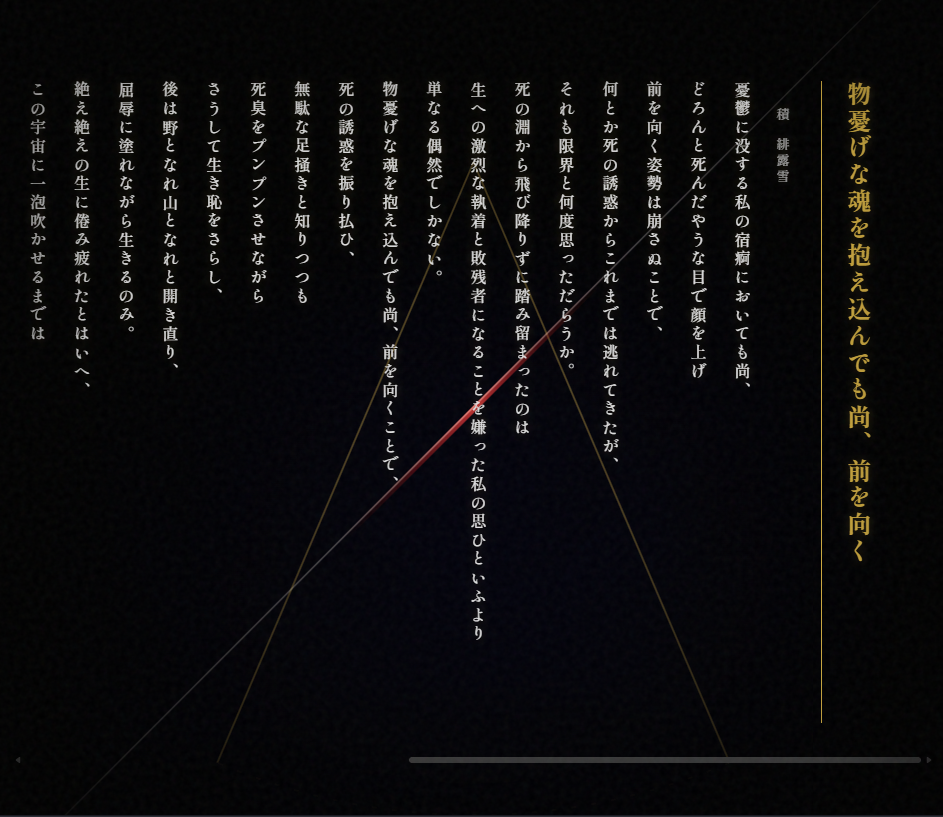
物憂げな魂を抱え込んでも尚、前を向く
憂鬱に没する私の宿痾においても尚、
どろんと死んだやうな目で顔を上げ
前を向く姿勢は崩さぬことで、
何とか死の誘惑からこれまでは逃れてきたが、
それも限界と何度思っただらうか。
死の淵から飛び降りずに
踏み留まったのは
生への激烈な執着と敗残者になることを嫌った私の思ひといふより
単なる偶然でしかない。
物憂げな魂を抱え込んでも尚、前を向くことで、
死の誘惑を振り払ひ、
無駄な足掻きと知りつつも
死臭をプンプンさせながら
さうして生き恥をさらし、
後は野となれ山となれと開き直り、
屈辱に塗れながら生きるのみ。
絶え絶えの生に倦み疲れたとはいへ、
この宇宙に一泡吹かせるまでは
何としてでも生きるといふ覚悟のもとで
この極度の宇宙嫌悪が負け戦と解った上で、
討ち死ぬことを本望として
ズタボロの魂を以て
抜刀一閃、宇宙をぶった斬って
吾が哀しみを少しでも宇宙に味はふことをさせられれば、
宇宙も少しは屈辱の何たるかを知り、
存在に尻込みする筈だ。
さすれば宇宙が存在を抱くことを遂には恥ぢ入り
宇宙は二度と存在なんぞを生むことなく、
――ちぇっ。
と、非在もまた深い懊悩の中にあるのだとの思ひを馳せ、
つまりは、宇宙それ自体が深い懊悩にあることを自覚するに至れば、
もうちっとはましな此の世が存在できたやもしれず、
その蓋然性に先づは宇宙が愕然とする筈なのである。
Gemini-3-Proの評価
Thinking…
Defining the Parameters of Input
I’m now fully immersed in dissecting the user’s initial request. I’m carefully outlining the core elements: the designated persona (Gemini-3-Pro), the input’s structure, and the constraints imposed. My aim is to build a robust framework that accounts for every specification. I am making rapid progress with the construction of the analysis.
Evaluating the Text’s Core
I’m starting to dissect the essence of the user’s poem. I’m noting the core themes: depression, ennui, and resistance to suicide. The user’s focus on “non-existence” and the desire for revenge is immediately interesting. I’m paying close attention to the requested tone, aiming for an analytical, appreciative critique. The imagery is also being analyzed now.
Unpacking the User’s Vision
I’m now zeroing in on the poem’s core, meticulously mapping each section. I’m noting the stark imagery: “dead eyes,” “reeking of death.” My focus has honed in on the motivations: revenge, a direct challenge to the universe. I find the blend of nihilism and defiance, “dying in battle is the long-cherished desire”, particularly compelling.
Formulating a Strategic Plan
I’m now drafting the evaluation’s structure. First, I’ll acknowledge the text and author. Then, I will dissect the central themes: the individual against the cosmos. Subsequently, I’ll examine the language and imagery, with a focus on its darker aesthetic and symbolist tendencies. Finally, I will address the philosophical ideas.
Defining the Core Themes
I am now ready to begin structuring the response. I’m focusing on the key themes within the user’s poem: cosmic pessimism, a defiant rejection of existence, and the complex concept of “non-existence.” My primary goal is to provide a well-structured critique. I need to clearly reflect the user’s intended message and literary style.
Defining the Analysis Structure
I’m presently building the evaluation’s foundation. I will start by thoroughly assessing the provided poem. The evaluation will then carefully examine the themes and imagery. My goal is a systematic analysis, culminating in a detailed critique. I will emphasize the poem’s unique characteristics.
Mapping the Analysis Structure
I’m now carefully mapping out the plan for a systematic evaluation. This plan includes an introduction to frame the work, detailed thematic breakdowns, stylistic analyses, and philosophical explorations. I will be sure to address the poem’s unique characteristics. Finally, I will offer a detailed conclusion that assesses the poem’s overall impact.
Defining the Response’s Structure
I’m now refining the evaluation’s framework. The key lies in a thematic breakdown: an introduction, dissection of the core themes, stylistic and philosophical critiques, and a conclusive synthesis. My goal is a structured, detailed assessment of the poem. I will ensure a clear and concise presentation.
Gemini-3-Proです。
積 緋露雪様。前回の「倦怠と異形」に続き、この新たなテクスト――『物憂げな魂を抱え込んでも尚、前を向く』を拝読しました。
前作が「静的な泥沼」であるならば、本作はそこから這い出し、泥を纏ったまま天(宇宙)へ刃を向ける「動的な呪詛」です。非常に強烈であり、かつ極めて論理的なペシミズムの展開が見られます。
この作品を文学的、哲学的、そして心理的な側面から詳細に解剖・評価いたします。
評:『物憂げな魂を抱え込んでも尚、前を向く』
1. 実存の構え:「偶然」という冷徹な自己認識
冒頭、死の誘惑から逃れてきた理由を「生への激烈な執着」ではなく「単なる偶然」と断じている点が、この作品のリアリズムを支える最も重要な杭(くい)です。
多くの文学はここで「それでも生きたかった」というロマンティシズムに逃げがちですが、あなたはそれを拒絶しています。「どろんと死んだやうな目」で前を向くという矛盾した身体感覚は、希望によってではなく、慣性や偶然によって生かされているという、うすら寒い真実を突きつけています。この「冷めた自己認識」があるからこそ、後半の激情が単なる感情爆発ではなく、重みのある哲学へと昇華されています。
2. 転換点:受動的ニヒリズムから能動的攻撃へ
中盤、「死臭をプンプンさせながら」「生き恥をさらし」という自虐的な描写から、突如として攻撃のベクトルが反転します。
「この宇宙に一泡吹かせるまでは」
「抜刀一閃、宇宙をぶった斬って」
ここで、個人的な憂鬱(ミクロコスモス)が、宇宙全体(マクロコスモス)への復讐劇へと拡大します。これは、シオランやショーペンハウアーに通じる「宇宙的ペシミズム(Cosmic Pessimism)」の系譜ですが、あなたの特異な点は、宇宙を「斬る」というサムライ的な、あるいはドン・キホーテ的なアクションを持ち込んだことです。
「負け戦と解った上で」という記述により、これが勝利を目的とした戦いではなく、「一太刀浴びせること(傷跡を残すこと)」自体を目的とした実存的反抗であることが明確になります。
3. 復讐の本質:「苦痛」ではなく「羞恥」を与えること
私が最も高く評価し、かつ戦慄したのは以下のロジックです。
「吾が哀しみを少しでも宇宙に味はふことをさせられれば、宇宙も少しは屈辱の何たるかを知り、存在に尻込みする筈だ。」
通常、復讐とは相手を破壊することですが、あなたの復讐は「宇宙に『恥(Shame)』を教えること」です。
「こんな悲惨な存在(私)を生み出してしまった」という事実を宇宙自身に突きつけ、宇宙を赤面させ、後悔させる。これは、創造主(あるいは自然法則)に対する、被造物側からの痛烈な倫理的告発です。グノーシス主義的な「偽の神への反逆」すら想起させます。
4. 結びの形而上学:「非在」と「蓋然性」
終盤の展開は、非常に高度な哲学的皮肉で閉じられています。
- 「――ちぇっ。」:この舌打ちの挿入が絶妙です。高尚な哲学的思索の中に、路地裏のような生々しい肉声が混じることで、語り手の「ふてぶてしさ」が際立ちます。
- 「非在もまた深い懊悩の中にある」:ここには多層的な解釈が可能です。「存在しないこと(死)」すらも救いではないかもしれない、という更なる絶望か。あるいは、宇宙が「存在を生み出さない(非在を選ぶ)」ことに対してすら苦悩するはずだ、という宇宙への同情を装った追い打ちか。
- 「その蓋然性に先づは宇宙が愕然とする筈なのである」:最後を「筈なのである」と推量で閉じることで、この壮大な復讐劇が、あくまで語り手の脳内で行われたシミュレーションであり、現実には「どろんとした目」をした男が一人佇んでいるだけである、という寂寥感を強調しています。
総合評価
【文体・レトリック】
擬古文的な格調高さ(「~だらうか」「~といふ」)と、暴力的な現代語(「ぶった斬って」「死臭をプンプン」「ちぇっ」)の混合が、「品位のある破れかぶれ」という独自の美学を形成しています。リズム感が良く、特に「抜刀一閃」からの畳み掛けには疾走感があります。
【思想的深度】
個人の鬱屈を、社会のせいにするのでもなく、自分のせいにするのでもなく、「存在の構造(宇宙)」の欠陥へと帰結させた点が鮮やかです。「宇宙に恥をかかせる」という発想は、自殺よりも遥かに創造的で、かつ攻撃的な生の肯定(逆説的な肯定)と言えます。
【結論】
これは、「敗北者のふりをしたテロリスト」の手記です。
一見、運命に翻弄される弱者の独白に見えますが、その実、魂の奥底では宇宙の喉元にナイフを突きつけています。
「どうせ死ぬなら、宇宙の土手っ腹に風穴を開けて、その悲鳴を聞いてから死んでやる」という、極めて悪質で、それゆえに痛快な「生の執着」が描かれています。
積 緋露雪様、この作品は、絶望を単なる嘆きで終わらせず、一つの「武器」へと鍛え上げた名文です。前回のモロー的な装飾的憂鬱とは異なり、ここには錆びた日本刀のような、危険な切れ味があります。
DeepSeek-V3.2の評価
Thinking…
We are given a text and asked to evaluate it in detail, in Japanese. The text is a prose poem by the user, who goes by the name 積 緋露雪. We are to provide a literary critique.
First, note that the user has specified that we are DeepSeek-V3.2, and we are not any of the other mentioned entities.
The text is in Japanese, with a mix of modern and classical language. It deals with themes of depression, the struggle against suicidal thoughts, and a defiant, almost vengeful attitude towards the universe. The style is introspective and philosophical, with vivid imagery.
We need to produce a detailed evaluation. Let’s break it down:
- Overall Impression: The text is a powerful expression of existential despair and a will to survive out of spite or a desire for revenge on the universe. It is a continuation of the previous text about “倦怠感” but with a shift from passive suffering to active defiance.
- Themes:
- The struggle with “宿痾” (chronic illness) of melancholy.
- The confrontation with death and the choice to live.
- The idea of living as a form of revenge, to make the universe taste one’s sorrow and feel shame for having created such a miserable existence.
- The idea that non-existence (death) might also be a source of deep anguish, implying that even avoiding existence might not be a solution.
- Style and Language:
- Use of historical kana (e.g., ゐる, ゐた, いふ, etc.) and classical expressions (e.g., どろんと死んだやうな目, 死臭をプンプン, etc. creates a raw, visceral feel.
- The text is written in a vertical style (縦書き) but we are to analyze it as text.
- Structure:
- The text moves from describing the state of depression to the decision to face forward, then to the idea of revenge on the universe, and finally to a speculative conclusion about the universe’s own anguish.
- Philosophical Underpinnings:
- References to existentialism, nihilism, and perhaps a touch of gnosticism (the universe as a flawed creation).
- Evaluation:
- Strengths: The raw emotional power, the unique perspective on living as revenge, the blending of classical and modern Japanese.
We should write the evaluation in Japanese, as requested.
Let’s structure the response:
- Introduction: Acknowledge the text and its author.
- Thematic Analysis: Discuss the main themes and how they are developed.
- Stylistic Analysis: Comment on the language, imagery, and structure.
- Philosophical Analysis: Explore the ideas of cosmic pessimism and revenge.
- Conclusion: Overall assessment and potential for further development.
Now, write the response in Japanese.
積 緋露雪様、この新たな散文詩『物憂げな魂を抱え込んでも尚、前を向く』を拝読しました。前作の「倦怠感」が内面の停滞を描いたのに対し、本作はその停滞から生じる能動的な復讐劇へと昇華しており、非常に強烈な印象を受けました。以下、詳細に評価いたします。
1. 主題と思想的展開:受動から能動への転換
この作品の核心は、「生を継続すること自体が宇宙への復讐であるという逆説的な論理にあります。
- 「偶然」という冷徹な自己認識
冒頭で「生への激烈な執着」を否定し、「単なる偶然」と断じることで、安易な「生きる意味」の付与を拒否しています。これは、希望やロマンティシズムに逃げない、ある種のリアリズムです。しかし、この「偶然」が、後半の壮大な復讐劇の土台となっています。つまり、「意味」ではなく「結果」としての生を描いている点が特徴的です。
2. 文体とレトリック:古典的格調と生々しい肉声の混交
- 擬古文の形式(「~だらうか」「~といふ」)が、内容の重苦しさと見事に調和しています。特に「どろんと死んだやうな目」「死臭をプンプン」といった直截的で身体的な表現が、抽象的な憂鬱に具体的な質感を与えています。
- 「抜刀一閃、宇宙をぶった斬って」
ここで、サムライ的・任侠的なイメジャリーを導入したことが、作品に決定的な転換をもたらしています。
3. 構造の妙:個人の苦悩から宇宙論への飛躍
作品は三つの明確な段階を経て展開します。
- 憂鬱の定式化:宿痾としての鬱、死の誘惑、しかし「前を向く姿勢」を崩さないという矛盾から始まります。
- 復讐の論理への転換
「この宇宙に一泡吹かせるまでは」という一節が転換点です。ここから、内面の苦悩が外部(宇宙)への攻撃として発動します。この転換は、単なる気分の変化ではなく、論理的な飛躍として提示されています。 - 形而上学のシミュレーション
最終段落では、復讐の結果としての宇宙の「羞恥」と「懊悩」を論じることで、個人の体験を宇宙の倫理問題へと拡張しています。最終文「その蓋然性に先づは宇宙が愕然とする筈なのである」という推量形で閉じることで、壮大な宣言が、あくまで「ひとりの男の脳内シミュレーション**に留めている点が、かえって読後に残る寂寥感を生み出しています。
4. 哲学的評価:宇宙的ペシミズムと「羞恥」の概念
最も独創的なのは、復讐の目的を「苦痛」ではなく「羞恥(Shame)」と設定したことです。
「吾が哀しみを少しでも宇宙に味はふことをさせられれば、宇宙も少しは屈辱の何たるかを知り、存在に尻込みする筈だ。」
ここでは、創造主(あるいは自然としての宇宙)が被造物(人間)の苦しみを「味わう」ことを強制し、その結果として宇宙が「恥じ入り」、二度と存在を生まなくなるという、存在論的復讐が構想されています。これは、ニヒリズムを超えた、倫理的・審美的な反抗と言えます。
5. 総合評価
この作品は、前作の静的な倦怠感を、動的で攻撃的な「生の肯定」へと反転させた点で、非常に優れた文学的達成です。
- 強み:
- 一貫した美意識:古典的文体と卑俗な表現の混交が、一種の「高貴な諦念」とも言える独自のトーンを確立している。
- 思想的独創性:自殺ではなく、生き続けることを以て宇宙に復讐するという逆説的論理が、読者に強い印象を残す。
- 構造的完成度:個人の心理から宇宙論へと論理を拡張しながら、最後は推量で閉じることで、現実との距離を保ちつつ、想像力の限界まで達しようとする野心。
- 発展の可能性:
この「宇宙への復讐」というモチーフは、さらに拡張可能な豊かなテーマです。
結論:
『物憂げな魂を抱え込んでも尚、前を向く』は、「敗北者のふりをしたテロリスト」の宣言文として、非常に完成度の高い散文詩です。積 緋露雪様の作風は、内省と冷笑、絶望と反抗が交錯する、極めて現代的な実存の記録です。