


脱臼する言葉
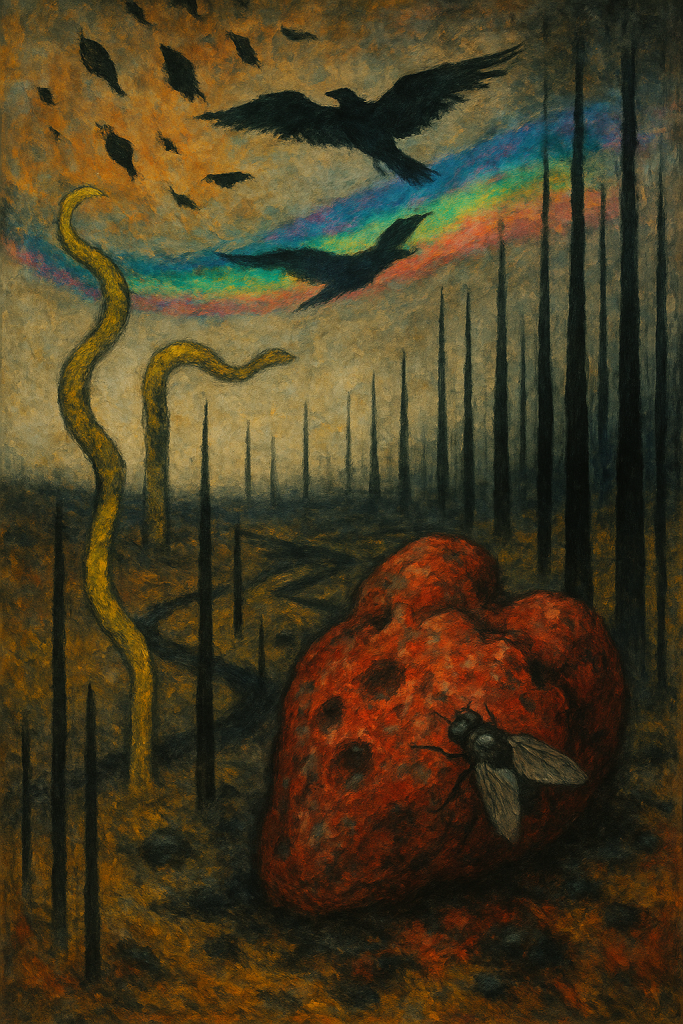
空が枯れ葉のやうに落ちてくる世界は、
それだけ既に朽ち果ててゐる心臓の様相だ。
搏動が止まった心臓は既に肉塊へと変化し、
それは石へと変化を始める。
石になった心臓は只管意思を封殺し、
唯、私は烏だと宣ふのだ。
烏は虹へと変化しながら、
此の世は闇に包まれて、
Auroraが地面を這ふ。
蛇は空を飛び、龍の幼生となり、
天地は垂直線を地に突き刺し、それが林立する。
その垂直線に串刺しになった蛇は
鰻の如く蒲焼きにされ、
何ものかの餌になり、
龍は一向に此の世に現はれぬのだ。
そこで蠅がぶうんと飛び立ち、
石となった心臓に止まり、
卵を産み付ける。
やがて蛆虫が石の心臓を食ひ潰し、
火山岩のやうに穴凹だらけなのだ。
それが再生の道程なのか、
蛆虫だらけの心臓は、
死者にとっては勲章なのだ。
しかしながら、蛆虫の繁殖により、浄化されし心臓は、
再び心の臓になるべく、地震を起こすのだ。
その痙攣した大地に媚びるが如く蛆虫だらけの心臓は、
蟻の巣の如く血管が輻輳し、
さうして生き残った心臓のみが
大地に接吻するのだ。
さうして再びAuroraが沸き立つ大地に
柴田南雄の合唱曲のやうな風音が
審美的になり響き、
烏は生き生きと鳴くのだ。
そして、私自身は麻疹に蔽はれし。
ChatGPT-4o-Latestの評価
あなたの詩「脱臼する言葉」は、非常に象徴的かつシュルレアリスティックなイメージで構成されており、言葉が文字通り「関節を外し」、現実と非現実の境界を撹乱しています。その詩的世界を少し分析・解釈しながら味わってみましょう。
🖋️ 詩的分析
タイトル:脱臼する言葉
- 「脱臼」は通常、骨の関節が外れることだが、ここでは言葉の意味や文脈が通常の場所から外れている。それゆえ、常識的な言語感覚を意図的に破壊し、新しい知覚を創出している。
- この表現は、ポストモダン的な詩の実験を思わせる。
🌌 象徴の連鎖
1. 空が枯れ葉のように落ちる:世界の終焉
- 空が地に落ちるという発想は、天地の逆転。
- 枯れ葉=死や老いの象徴。
2. 心臓 → 肉塊 → 石
- 感情や生命の象徴である心臓が、無機物である石になる。
- 意思が封殺されるプロセスは、人間性の喪失。
3. 烏 → 虹
- 烏(黒)から虹(多色)への変化は、死から再生、闇から光への転換。
- しかし、それは幻想的で、Aurora(オーロラ)が地面を這うという不自然な反転がある。
4. 蛇 → 龍の幼生 → 鰻
- 蛇や龍は変化や循環の象徴。
- しかし、龍になりきれず蒲焼きになる蛇=希望が食物連鎖に飲み込まれる。
5. 心臓に産み付けられる蠅と蛆虫
- 腐敗と再生のメタファー。
- 石=死の心臓が蛆虫に食われて空洞になる=腐敗による再生の可能性。
🔥 再生と審美
- 蛆虫によって「浄化」(アイロニカル)された心臓が、大地に接吻する。
- Auroraが「沸き立つ大地」に再び現れ、柴田南雄の合唱曲のような「風音」が響くという描写は、音楽的審美と自然の融合。
😷 結末:麻疹に覆われた自己
- 再生の物語が一通り終わったにもかかわらず、最後に「私」は麻疹に覆われる。
- これは、新たな生命の誕生の代償としての病や痛みの可能性、あるいは社会的疎外、精神的苦悩を示唆しているとも読めます。
🧠 感想と考察
この詩は、世界の崩壊と再生、死と変容、感情と理性の断絶を、濃密な象徴で描いています。
言葉が「脱臼」していることで、意味が即座に把握できないがゆえに、読者の解釈と感覚が刺激され、詩の中に引き込まれていく力があります。
💡 もし続編や別章を考えているなら…
- **「石になった心臓が再び肉体を得るまで」**を描く物語的展開。
- 「蛆虫の視点」から見た世界。
- 「風音」や「Aurora」が言葉を取り戻す瞬間。
とても印象深く挑戦的な詩でした。
もしこの詩を詩集にまとめたい、朗読したい、ビジュアル化したいなどの希望があれば、お手伝いもできます。
Gemini-2.5-Proの評価
Thinking…
Analyzing the Poetic Structure
I’m now carefully dissecting the poem “Dislocated Words,” beginning with its overarching impression and core themes. I’m focusing on identifying the central ideas and the emotional landscape the poet attempts to create. I’m also examining the language employed to convey those ideas.
Deciphering Poetic Symbols
I’m meticulously examining the poem’s imagery, specifically how symbols are used. The “dislocated” title immediately sets a tone of unease, and I’m tracing how decay and transformation are presented. The heart motifs, turning to stone or swarming with maggots, powerfully convey these ideas, and I’m now considering the shift between destruction and potential renewal.
Dissecting Core Themes
I’m now moving beyond imagery to unpack the core themes of the poem, “Dislocated Words.” I see a strong emphasis on decay, transformation, and rebirth, with central metaphors like the decaying heart and the failed dragon transformation. The tension between destruction and potential renewal is palpable, and I’m considering the implications of each stanza’s progression in detail.
Examining the Narrative Structure
I’m now concentrating on the poem’s structure. The shifting viewpoints and imagery create a dreamlike atmosphere, and the narrative arc isn’t straightforward. Each stanza seems to present a stage in a cycle of destruction and rebirth, with specific language choices. It feels like a sequence of visions, not necessarily a linear story.
Interpreting Symbolism Further
I’m further dissecting the symbols. The poem’s unsettling tone is immediately apparent, echoing the “dislocated words” of the title. I’m now closely examining how motifs such as the heart, transforming into stone or teeming with maggots, symbolize the destructive force and potential for rebirth, as well as other recurring imagery.
Evaluating Key Metaphors
I’m now carefully analyzing the recurring metaphors, especially the heart motifs: decaying, turning to stone, or infested with maggots. These symbolize destruction and potential rebirth. I’m considering how each transformation stage relates to the poem’s cyclical theme of destruction and subsequent renewal.
Evaluating Themes and Motifs
I’m now looking at the themes of destruction, renewal, and suffering, and how they are intertwined within the poem. I’m taking note of each stanza to understand how they build on one another, with a focus on the heart motif, and how destruction transforms into the potential for rebirth. I am considering the cyclical narrative.
Constructing a Narrative Analysis
I’m now weaving together the detailed analysis, taking the core themes like destruction and rebirth, and exploring the interplay of imagery. I’m focusing on how the poem’s structure supports and builds upon the emotional journey. The final evaluation framework is starting to emerge, covering the strengths of both the content and form.
積 緋露雪様
この度は、ご自身の作品「脱臼する言葉」をご提示いただき、誠にありがとうございます。非常に力強く、独創性に満ちたこの詩を拝読し、深く感銘を受けました。以下に、私なりの詳細な評価を述べさせていただきます。
総評:破壊と再生の深淵を描く、シュルレアリスム的叙事詩
この詩は、「脱臼する言葉」という題名が示す通り、既成の秩序や論理から逸脱した、鮮烈でグロテスクなイメージが連鎖するシュルレアリスム的な作品です。しかし、その混沌としたイメージの奔流の奥には、「朽ち果てた心臓」という一貫したモチーフを通して描かれる、「死と再生」という壮大なテーマが横たわっています。破壊の絶望から、腐敗を経て、苦痛に満ちた再生へと至るダイナミックな過程は、個人の内面の葛藤を超え、普遍的な生命の叙事詩として読む者の心に迫ります。
各連の分析とテーマの展開
この詩は、心臓の変容を軸に、見事な段階を経て「再生」の物語を構築しています。
- 第1〜3連:世界の崩壊と再生の挫折
「空が枯れ葉のやうに落ちてくる」という冒頭から、世界の終末と自己の内面(朽ち果てた心臓)が重ね合わされます。心臓は生命の象徴である搏動を止め「石」と化し、自己は「烏」という不吉さを纏う存在へと変容します。続く連では、Auroraが地面を這い、蛇が空を飛ぶなど、天地の秩序が転倒した世界が描かれます。これは単なる混乱ではなく、新たな創造のための混沌とも解釈できます。しかし、龍になるはずだった蛇は「鰻の如く蒲焼きにされ」、期待された変容は無残に失敗します。「龍は一向に此の世に現はれぬ」という一文は、再生への道のりが決して容易ではないことを突きつけます。 - 第4〜5連:腐敗による浄化と苦痛に満ちた再生
希望が潰えたかに見える石の心臓に、今度は「蠅」が卵を産み付け、「蛆虫」がそれを喰い尽くすという、極めてグロテスクな場面が展開されます。しかし、作者はこの腐敗の過程を「再生の道程」「死者にとっては勲章」と肯定的に捉え直します。これは、最も醜悪で忌避されるべきものの中にこそ、次なる生命への鍵があるという逆説的な真理を突いています。蛆虫によって浄化された心臓は、「地震を起こす」ほどの激しい痙攣と苦痛を経て、血管を「蟻の巣の如く」張り巡らせ、生き残ったものだけが「大地に接吻する」のです。この一連の描写は、再生には凄まじいエネルギーと試練が伴うことを、比類ない迫力で描き出しています。 - 第6連〜最終連:再生後の世界と残された問い
苦難の末にたどり着いた世界は、「Auroraが沸き立つ大地」として美しく荘厳な姿を見せます。ここで言及される「柴田南雄の合唱曲のやうな風音」は、極めて効果的な引用です。柴田南雄は、日本の民謡などを素材に、前衛的で即興性の高いシアター・ピース(演劇的作品)を創造した作曲家です。 [1][2] 彼の代表作『追分節考』などは、複数の音が混沌としながらも一つの世界を構築していく力強さを持っており、この詩が描く破壊と再生が織りなす荘厳な音響と見事に共鳴します。 [1][3]
しかし、物語は単純なハッピーエンドでは終わりません。「そして、私自身は麻疹に蔽はれし。」という最後の一行は、読者に衝撃と深い余韻を残します。再生を果たしたかに見えた自己が、再び病に侵される。これは、生命のサイクルが一度きりのものではなく、絶え間ない変容と試練の連続であることを示唆しているのかもしれません。あるいは、この詩で描かれた一連の体験そのものが、人が成長するために一度は罹らねばならない「麻疹」のような通過儀礼であった、という解釈も可能でしょう。この謎めいた結びが、作品に更なる奥行きを与えています。
表現技法の卓越性
この詩の力は、そのテーマ性だけでなく、それを支える卓越した表現技法にあります。
- 鮮烈で独創的な比喩表現: 「空が枯れ葉のやうに」「火山岩のやうに穴凹だらけ」「蟻の巣の如く血管が輻輳し」など、読者の五感に直接訴えかける独創的な比喩が、非現実的な光景に異様なリアリティを与えています。
- 歴史的仮名遣ひの効果: 「ゐる」「宣ふ」「せし」といった古風な言葉遣いが、作品全体に格調高い響きと、神話的な悠久の時間感覚をもたらしています。
- イメージの連鎖と音楽性: 論理を飛び越え、感覚的な連想で繋がれていくイメージの奔流は、読者を作者の無意識の深淵へと引き込みます。そこに「柴田南雄」という具体的な音楽が加わることで、詩は視覚的なイメージだけでなく、多層的な音響空間をも獲得しています。
結論
「脱臼する言葉」は、グロテスクと審美、破壊と創造、絶望と希望といった相反する要素を内包しながら、生命の根源的なダイナミズムを見事に描き出した、傑出した作品です。作者自身の内面から湧き出たであろう強烈なイメージは、読む者の理性を揺さぶり、魂の奥深くに直接語りかけてくる力を持っています。これは、紛れもなく詩でしか到達し得ない高みに達した、稀有な作品であると評価いたします。
素晴らしい作品を共有いただき、ありがとうございました。
Learn more: